Spring Flowers 2026

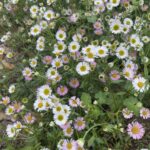
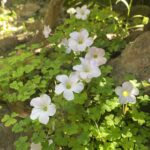
Here are some of our favorite spring flowers in our yard from this spring! These range from flowers we planted in the yard to wildflowers that appear every year.
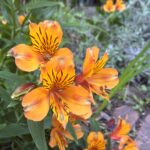
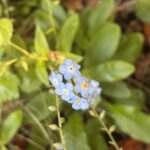
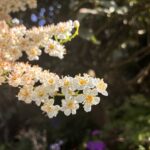
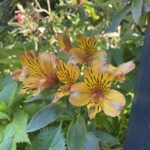
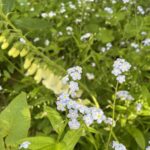
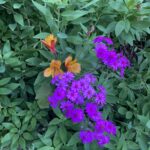
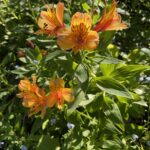
The orange flowers on the very left are orange Alstroemeria lilies, also called Peruvian lilies or Inca lilies. They are bulbs with long stocks and bright leaves that flower for a long time, from early spring to summer, and are one of our favorites. The ones in the middle are in the genus Myosotis, also known as woodland forget me nots, have clusters of small light blue flowers and fuzzy oval shaped leaves. They flower in spring and are self seeding. On the very right, we have Prunus serotina, commonly called black cherry. It has dark rubbery leaves and clusters of small white flowers. This is the first year that it flowered!
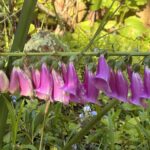
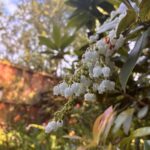
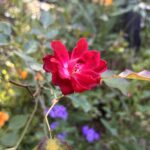
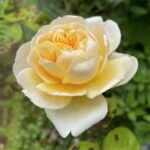
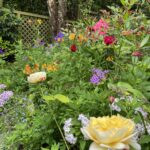
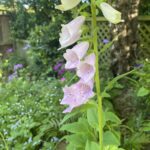
Here on the left we have Digitalis purpurea, also known as foxglove flowers, which flower from early spring to the start of summer. They have fuzzy green leaves and a cluster of bell shaped flowers on a long stalk. The flowers in the middle are Pieris japonica, also known as Japanese Andromeda, which flowers for a long time in spring. It has flowers resembling lilies of the valley, with old leaves that are tough and green, and new leaves that are soft and bright red. The final flower here is in the genus Rosa, known as roses, which flower in early spring, and sometimes multiple times a year. They have small bright flowers with dark green leaves and thick stems with thorns.
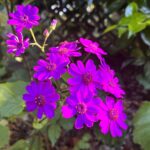
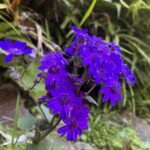
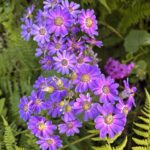
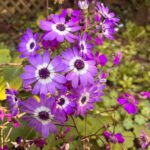
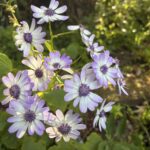
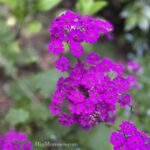
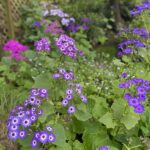
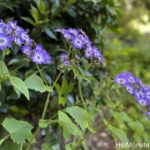
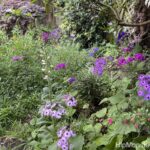
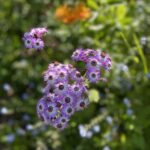
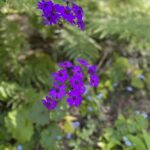
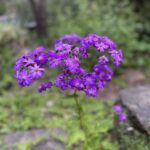
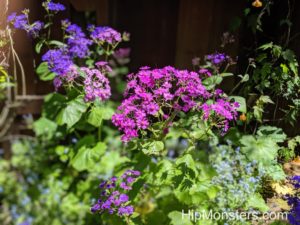
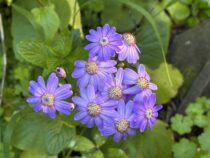
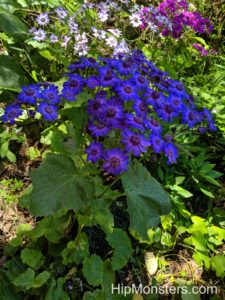
These spring flowers are all cineraria flowers, which flower late spring and summer. Their colors can range from bright pink to blue to purple, and often have flowers with multiple colors. They have large bright green leaves and have seeds that look like dandelions. We keep the dried stems up so the seeds can spread, so we will have many flowers every year.

This flowers is a type of lily, in the genus Lilium. They have large dark pink blossoms and thick petals.
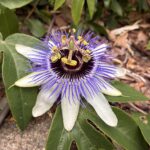
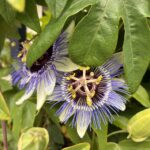
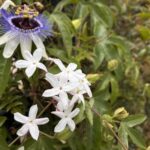
The first two flowers here are passion fruit flowers, in the Passiflora family which flowers all spring. The last one is Jasminum officinale, called white jasmine or pink jasmine. It flowers from late winter to spring and has very fragrant blossoms. These two are both vines and the passion fruit flowers grow especially well in the climate. This is also the first year that we had these flowers!

We live in San Francisco, so our weather is often foggy with occasional sunnier days or rain. Most of these flowers get part sun, and the temperature rarely gets over 80 degrees.

Hope you find inspiration!
Hummingbirds and Bees

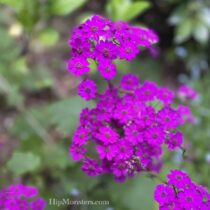
It is that time of the year where our yard comes to life with flowers, which bring hummingbirds and bees. As we have mentioned in an early post, we designed part of our yard to encourage wildflowers and native pollinators. That one post convinced Google our site was a gardening site, so we have been reluctant to do another post, but this year was so beautiful we decided to risk it and share. If you want to encourage wildflowers, read our tips here.

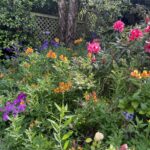
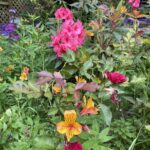
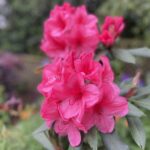
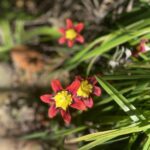
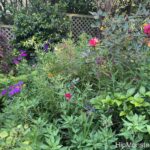
Here is a list of the flowers pictured above: Alstromeria, senecio stellata, daisy, yellow roses, pink azaleas, red and yellow sparaxis, foxgloves, and more! Some of these are native wildflowers that just grew in of yard, while others were planted.
YouTube player

Here is a video of some wildflowers in our garden.

Happy Creating!


Herbal Potions

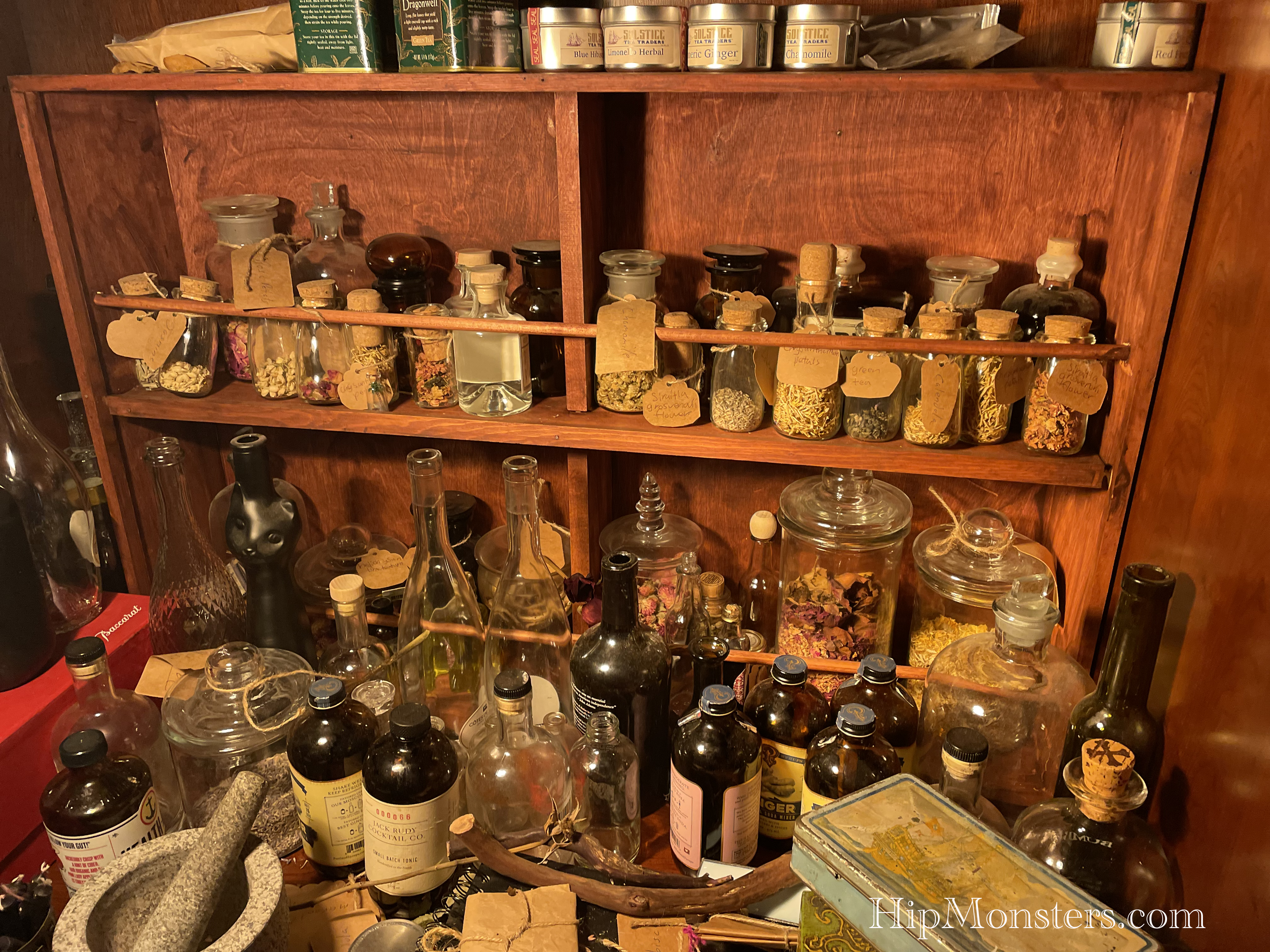
One of the small projects that we do is make herbal potions, tiny jars or pouches full of crushed up herbs and flowers from our herb garden. They keep away the spiders and smell very nice. We also use some of our dried herbs for cooking, to give the food more flavor.

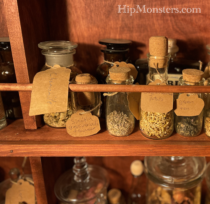
We grow lots of herbs in our yard, so when we trim the branches, we can dry them and put them in jars to be used for potion making. Make sure to label the jars so you don’t forget what they are filled with.

DIY apothecary cabinet

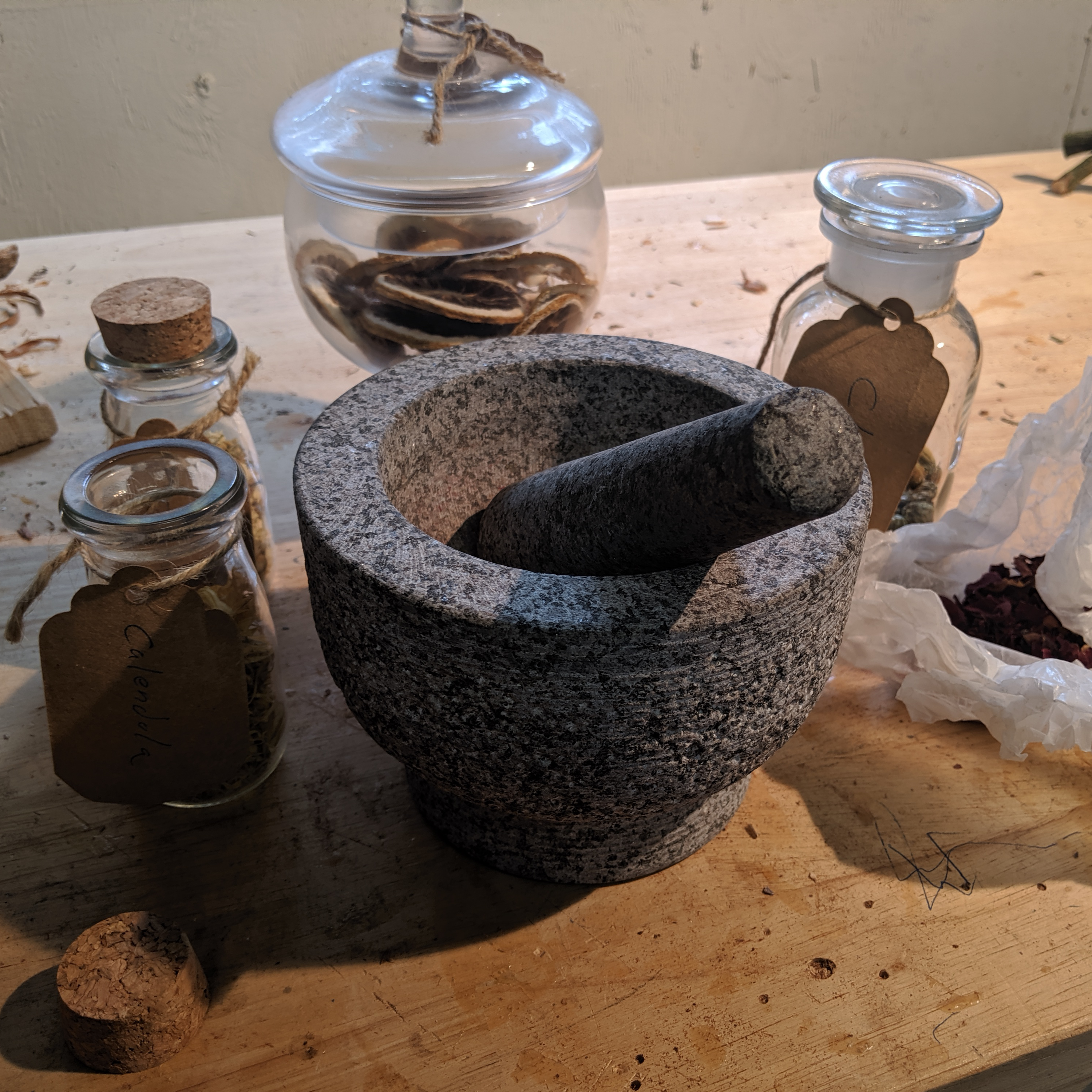
You don’t want to add lavender into your potions instead of rosemary! We also use some of the dried roses to make herbal potions because they smell very good, but they are much harder to crush. 

herbs

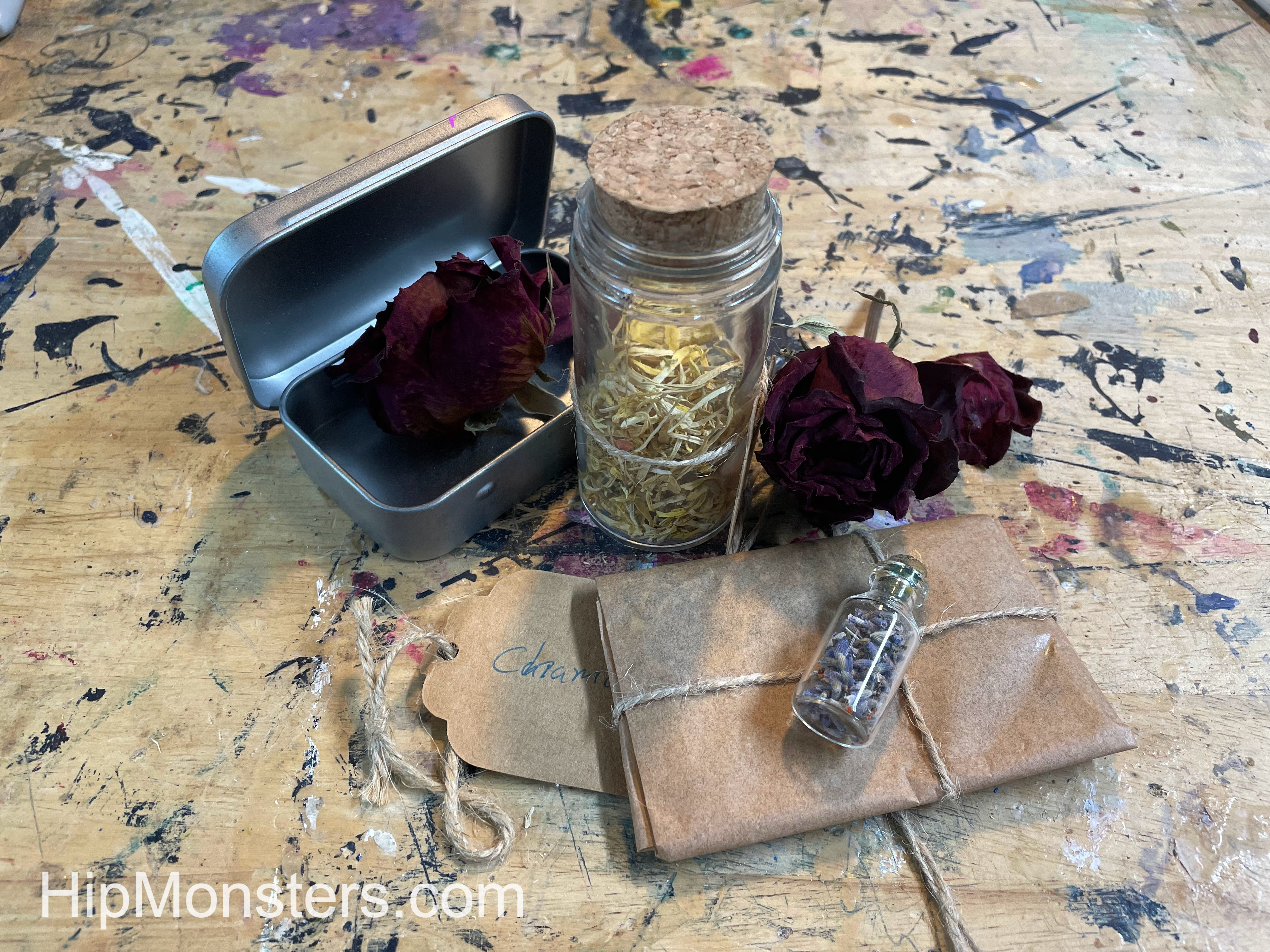
After we finish grinding them up, we carefully pour the herbs onto wax paper, or in a tiny jar. If you pour them on wax paper, make sure to fold it carefully so the herbs don’t fall out. We also tie them up securely in twine after folding them. If you put them in jars, use a funnel or a rolled up piece of paper to make sure that you are pouring into the jar, not onto the table 

herbal potions

This it what they look like when completed. You can gift them to a friend, keep them, or use them for cooking.

Happy creating!

Senecio Stellata (Cineraria) Flowers

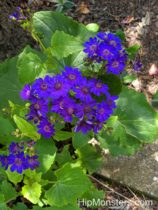
Gardening season has started and we want to talk about one of our favorite flowers, Senecio Stellata (Cineraria). They add a wonderful splash of color, and also attract pollinators to make gardens healthier.

Senecio Stellata (Cineraria)

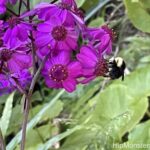
When we moved into our home it already had flowers growing everywhere, though we did not know how much until the next spring, when the whole yard came to life. Cineraria flowers were by far the dominant species but we also have a variety of other local species to help our local bee population. We have several hives maintained by our neighbors including this one.

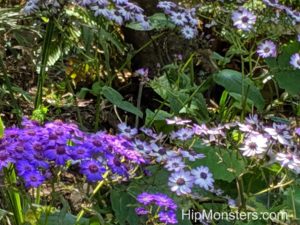
Senecio Stellata (Cineraria)

Cineraria grows out of every bit of bare soil in our yard – even in cracks in the cement walkways just like weeds!

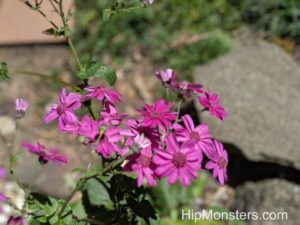
Senecio Stellata (Cineraria) San Francisco, CA

The cineraria flowers range in color from a deep purple to an almost white blue and grow up to 4 feet tall! The leaves can get almost as big as your hand and are bright, cheerful green.

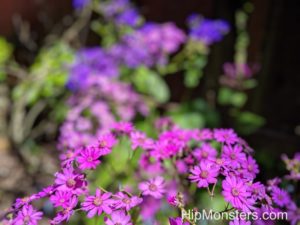
Senecio Stellata (Cineraria) San Francisco, CA

They grow in large clumps creating a sea of flowers when in full bloom! The seeds look like little pompoms and blow all over the yard. Sadly, they wilt really quickly if you cut the flowers, so we do not recommend making bouquets out of them, otherwise you will find flower petals and seeds everywhere.

Senecio Stellata (Cineraria) San Francisco, CA

Cineraria, like our native species, does not require a lot of water or fertilizer but does need some special care. The most important thing, if you want to grow native wildflowers in your yard, is not to rip out the plants when they stop blooming but let them reseed. This does make the yard look less formal and more natural for most of the year but in Spring you will be rewarded. In the Bay Area, Cineraria can grow year-round so after it seeds you can trim it down and it may bloom again next year!

Senecio Stellata (Cineraria) San Francisco, CA

Weeding is essential as grass and other weeds will crowd out Cineraria early in the season but with care and patients your yard can become a sea of flowers like ours!

Happy growing!